
Clarity in a Cup
The study linking coffee to brain health—and why formulation matters.

I’m Brandon Wilson — a health consultant helping purpose-driven people take control of their wellness and become truly wellthy.
Each week, I share practical insights, biohacker-level strategies, and real-world wellness tools so you can make informed choices, elevate your energy, and build a body that supports your best life.
If you’re committed to investing in your health — not just learning, but actually upgrading — you’re in the right place.
First time here? Welcome. Your future self is already thanking you.
In today’s newsletter:
A Be Wellthy breakdown of a recent study on the link between coffee/tea and risk of dementia and cognitive decline
A spotlight on a functional coffee formulated to support gut/brain function
A daily habit list of the top 10 foods to support brain health
If no one has done so, allow me to be the first to welcome you to March! Let’s start the month with a positive intention.

I hope you are as excited as I am about a fresh month full of possibilities.
📰 Be Wellthy Breakdown
Is long-term intake of caffeinated and decaffeinated coffee and tea associated with risk of dementia and cognitive outcomes? A study published on February 9, 2026, in JAMA has some interesting insights.
Researchers followed more than 131,000 U.S. adults for up to 43 years to see whether how much coffee or tea people drank was linked to their chances of developing dementia or having cognitive decline later in life. Researchers combined two long-running health studies of doctors, nurses, and other health professionals. Participants reported how much caffeinated coffee, decaf coffee, and tea they drank every few years. Researchers tracked who developed dementia and also looked at self-reported memory problems and some formal cognitive tests.
Key findings:
✅ People who drank more caffeinated coffee had a lower risk of developing dementia compared with people who drank little or no coffee.
✅ They also reported less subjective cognitive decline (self-perceived worsening memory or thinking).
✅ In one group, higher caffeinated coffee intake was linked with slightly better performance on objective cognitive tests, although not all measures were statistically significant.
✅ Decaffeinated coffee did not show any clear protective association.
✅ Tea drinking had similar associations to caffeinated coffee.
✅ The strongest benefits were seen around 2–3 cups of caffeinated coffee per day (and about 1–2 cups of tea).
There are many other studies suggesting the neuroprotective effects of coffee, as listed in this review article.
It’s no secret that I’m #Teamcoffee, and I’ve written several newsletters on the topic, including one in November summarizing the benefits of my favorite mushroom coffee—Lattekafe. Today, I’d like to share another powerful, functional coffee blend formulated specifically for brain and gut health.
Introducing NEUROKAFE from Vital Health Global
There are myriad products to support brain health, but did you notice the ingredients in this formulation primarily support gut health? The gut is often called the “second brain,” and brain health links directly to gut health.
Key Ingredients and Benefits
Inulin
Inulin is a fermented fiber that feeds beneficial gut bacteria. Inulin has been shown to help with constipation and support regular bowel movements. As a prebiotic, inulin modulates the gut microbiota by increasing the abundance of beneficial bacteria.
Bacillus Coagulans
Bacillus coagulans is a spore-forming probiotic. Spore-forming probiotics are known for their high tolerance to extreme environments, allowing them to survive stomach acid and reach the microbiome. One clinical study concluded that Bacillus coagulans provided relief from symptoms of irritable bowel syndrome (IBS). A published review indicates that Bacillus coagulans promotes intestinal digestion, regulates gut bacterial balance, and enhances immune function.
Ganoderma Lucidum (Reishi)
This mushroom is known for promoting relaxation and balanced immune function. Animal studies have demonstrated that reishi extracts prolong sleep duration and have a long history of use for restlessness and insomnia. An RCT suggested improved mood and sleep in young adults with a mushroom blend.
Panax Ginseng
This adaptogenic root is linked to improved mental performance and attention, as well as to stabilizing blood sugar. A systematic review found therapeutic benefits for diseases related to aging, including inflammation, oxidative stress, neurodegeneration, metabolic disorders, cardiovascular diseases, and cancer.
Fulvic acid
Fulvic acid is a naturally occurring organic compound derived from humic substances found in soil, sediment, and water. It is formed through microbial decomposition of plant and animal matter over millennia, yielding a bioactive, low-molecular-weight compound rich in minerals, trace elements, and electrolytes. Unlike synthetic pharmaceuticals, fulvic acid operates synergistically with biological systems, enhancing nutrient absorption, cellular detoxification, and metabolic efficiency without harmful side effects. A literature review suggests that fulvic acid shows promise in preventing chronic inflammatory diseases.
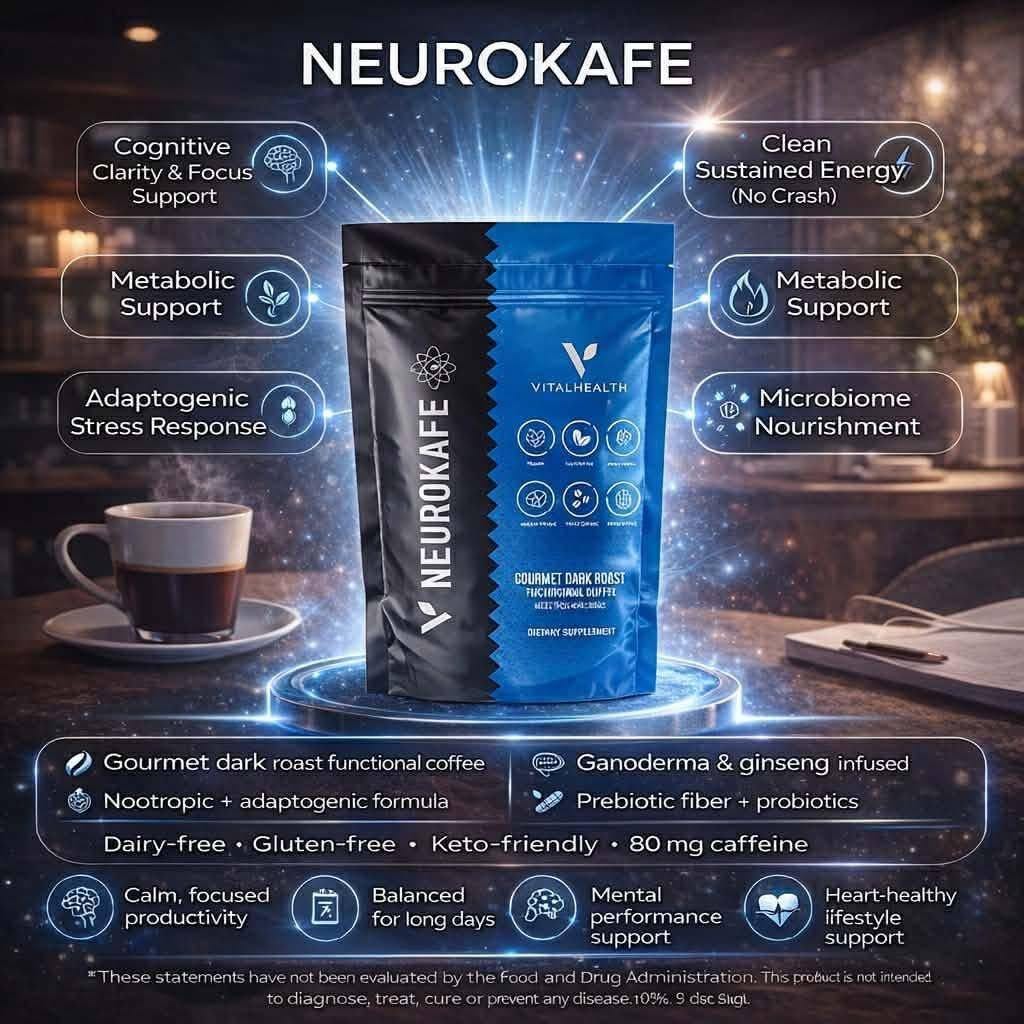
What’s in YOUR coffee, and how is it supporting your health? You can brew NEUROKAFE on its own or add a scoop to your daily brew. Your body will thank you.
If you’d like to try NEUROKAFE, you can purchase it on the Vital Health website.

We finally made it to the week of UNICON!
🔥 The most powerful event of the year is BACK. UNICON 3 is not just a conference—it’s a collision of destiny, vision, and exponential impact.
You’ll meet the partners, clients, and collaborators who could change your life. You’ll learn how to multiply your revenue through Golden Connections and create a scalable impact by aligning your business with your Future Self.
🎯 If you’re serious about achieving unrealistic goals in 2026, this is the room you must be in. I will be there as a vendor representing Vital Health, and I’d love to see you there. Learn more and get tickets here.

The Daily Habit is where I share my habits related to the fundamentals: sleep, diet, physical activity, mindfulness, and stress management.
Feed your brain like it’s your most valuable asset. Stabilize blood sugar.
Increase healthy fats. Flood it with antioxidants. Reduce inflammation. Here are the top 10 foods for brain health:
Fatty fish (salmon, sardines, mackerel)
Blueberries
Leafy greens
Eggs
Walnuts
Avocados
Turmeric
Dark chocolate (70%+ cacao)
Broccoli and cruciferous vegetables
Green tea
Be Wellthy Club Member exclusives for this newsletter:
Audio commentary
Link to AI tools I use for scientific research
A new tool to help you decode your body’s signals
A way to reframe “I’m too busy” using the Drama vs. Empowerment Triangles
Week 6 check-in for my health program with observations and my numbers
👉 Join the Be Wellthy Club ($7/month or $70/year) for full access to 285+ past issues, bonus content, exclusive audio, and a private Facebook group.
